
Meet the Founder
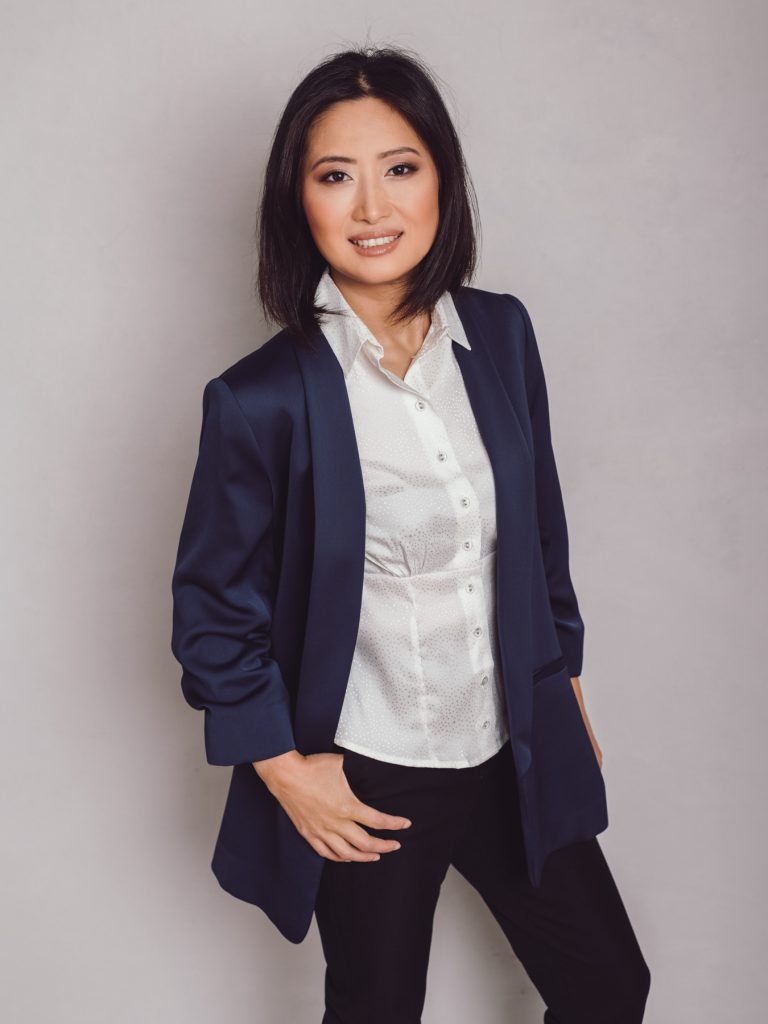
Chloe Ding
Founder · Precision Tax Accounting
“I built this practice around one belief: that a growing business deserves someone in its corner who understands the numbers as well as the owner does — and is there when the decisions are actually being made.”
Precision Tax Accounting is a sole-practitioner firm. That is a deliberate choice, not a limitation. When you work with me, you work with me — the same person for every call, every filing, every question when something needs an answer before you can move forward.
Fellow Member of the AAT — the senior grade, awarded to practitioners with demonstrated expertise
Association of Taxation Technicians — qualified tax practitioner, current with HMRC legislation
The background
Where the expertise actually comes from.
Growing businesses reach a point where the finance function stops keeping pace. It doesn’t announce itself loudly — it shows up as friction. Decisions that take longer than they should. Questions that go unanswered until the year-end conversation. A vague sense that the numbers exist but nobody’s really leading them.
“Most accountants have seen your numbers from the outside. I’ve felt what it costs when they’re wrong from the inside.”
Chloe Ding · Founder
My career in finance has taken me to two very different places. Before setting up in practice, I worked inside growing businesses — as part of their finance function, not as an external adviser. I’ve sat at the desk where the payroll has to go out on time, where the cash flow spreadsheet gets opened every Monday morning, and where a bad month shows up in real time rather than six months later.
That experience changed how I think about accounts. Numbers on a page only matter if the person reading them understands what they mean for the business making them. A profit and loss statement is not just a compliance document — it’s a management tool, and it’s only useful if it’s current, accurate, and explained in plain language.
I then moved into practice — working on tax compliance, HMRC submissions, VAT, and the technical side of accounting that requires precision and current knowledge of a shifting legislative landscape. That dual path is not common. Most accountants come from one direction or the other. Having done both means I understand the problems at both ends — the strategic and the technical — and I can apply that to your business in a way that neither a pure compliance firm nor a general finance manager can.
I set up Precision Tax Accounting because I saw a specific gap: growing owner-managed businesses that had outgrown their bookkeeper and their once-a-year accountant, but weren’t large enough to justify a full-time Finance Director. That gap is exactly where I work — across Worcester, Cheltenham and Stroud.
The combination
Two tracks of experience. One person in your corner.
This isn’t two separate services bolted together. It’s one person who has operated on both sides of the finance function — and brings that to every client engagement.
Inside the business
Operational finance under real pressure
Working as part of an in-house finance team for fast-growing companies means understanding that the numbers don’t exist in isolation. Payroll affects hiring decisions. Cash flow timing affects supplier relationships. How you categorise a cost today affects your tax position in twelve months.
I’ve built reporting from scratch, managed month-end closes with incomplete data, and been in the room when the directors needed a fast answer to a financial question. That operational fluency shapes how I work with every client.
- Finance process design and implementation
- Month-end close and management reporting
- Cash flow management and forecasting
- Payroll oversight and compliance
- Working alongside operations, not at arm’s length
In practice
Compliance work is not just paperwork. HMRC’s landscape changes constantly — Making Tax Digital, basis period reform, R&D credit changes, employment status rules, VAT treatment on complex transaction types. Staying current is a full-time undertaking.
My ATT qualification and ongoing CPD means I track what changes and apply it to your position before it becomes a problem. Most issues I see in new clients weren’t caused by dishonesty — they were caused by advice that was already out of date when it was given.
- Corporation tax planning and filing
- VAT returns — including complex structures
- Self-assessment and personal tax
- HMRC correspondence and enquiry support
- Current with legislation — not last year’s rules
Why sole practitioner
This practice is just me. That’s the point.
Larger firms have a business model that requires volume. That model means you onboard with a senior partner and get transitioned to a junior. Your year-end is processed by someone who has never had a proper conversation with you. That’s not a criticism — it’s how the economics work at scale. This practice works differently.
The signals
These aren’t crises. They’re the quiet indicators that the next chapter needs a different approach.
- You always speak to the same person
Every call. Every email. Every question. The person who picked up the phone is the person who knows your accounts, understands your business model, and can give you a useful answer without putting you on hold to ask a colleague. - No knowledge gets lost in handoffs
When you explain your business once, it stays understood. You don’t repeat the context every time you have a new question. The relationship builds genuine knowledge of your business over time — that’s how good advice gets better. - Available when decisions are being made
Not when it’s convenient for a firm’s workflow. All business hours, direct line, no meter running. When something needs a financial perspective the moment you need it — not at the next scheduled review. - Your work is my direct responsibility
There is no junior who processed your VAT return without my sign-off. Everything that goes to HMRC under my name has been prepared or checked by me. That accountability is not something I can delegate — and I wouldn’t want to. - I take a limited number of clients
A sole practitioner doing this properly can only work closely with a limited number of businesses at one time. That’s not a constraint — it’s the model. It’s why the service is substantive rather than transactional. - If I’m ever unexpectedly unavailable
Illness, a family emergency — genuine gaps happen to every sole practitioner, and a serious buyer is right to ask what happens then. I hold a reciprocal cover arrangement with another qualified practitioner, briefed on live client files, so a real gap in cover doesn’t leave your business without an answer. It isn’t a substitute for working with me day to day — it’s the safety net for the day you’d need one.
What to expect
Working with me, in practice.
Three things that shape every client relationship from day one.
01 / 03
Direct, plain-language communication
I don’t communicate in accounting jargon. If a number matters to your business, I’ll explain why in plain terms — what it means, what it affects, and what you should do about it. You shouldn’t need a translation layer between your accountant and your decisions.
02 / 03
Proactive, not reactive
I don’t wait for a filing deadline to check your position. When something in your business or the tax landscape changes that affects you, I’ll tell you before it becomes urgent. That’s what year-round engagement means in practice — not a monthly report and silence in between.
03 / 03
Honest about what I can and can’t do
I cover accounting, tax, and finance director-level advisory. If a situation needs a specialist — a corporate solicitor, an IFA, a specialist tax barrister — I’ll tell you that and point you to the right person. Knowing the edges of your expertise is part of doing the job properly.
If this sounds like the kind of relationship your business needs, let’s talk.
A first conversation is free and takes about an hour. Bring the finance question you haven’t been able to get a straight answer to — that’s usually the most useful place to start. No obligation, no pitch deck.
Book a Discovery Call
With Chloe directly · No obligation · One working day response
Worcester · Cheltenham · Stroud · Remote nationwide